
Educational Game Manufacturing Case Study
Children’s Literacy Game
From Prototype to Production
How we refined acrylic letter-tile printing, developed a custom storage tray and improved row visibility to bring a hands-on learning product into production.
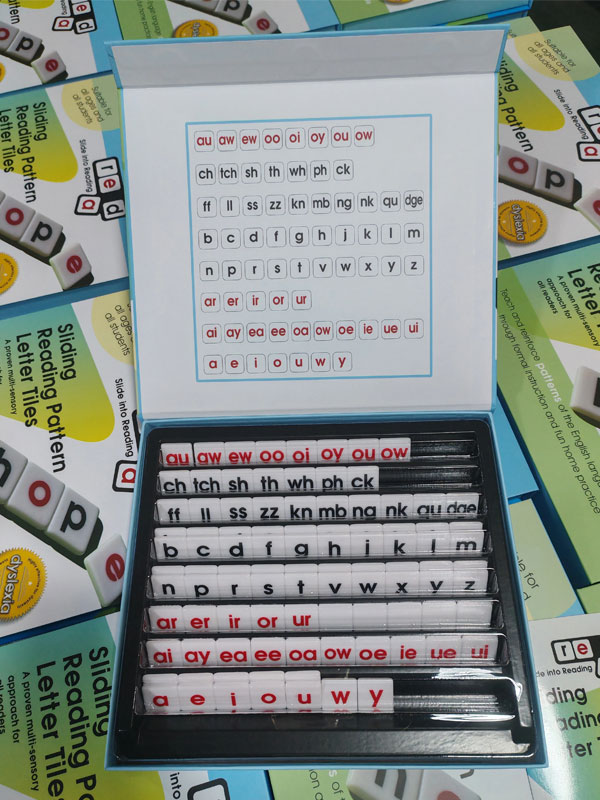
A Learning Product, Refined for Everyday Use
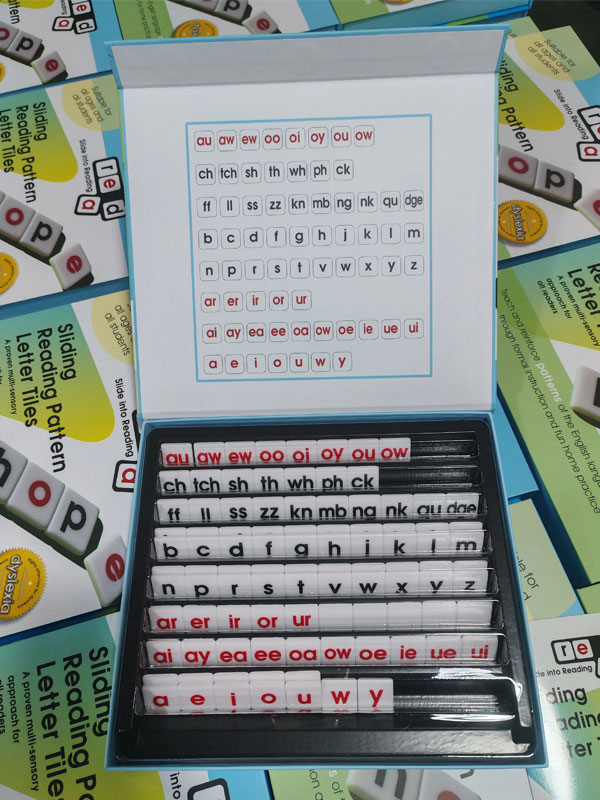
01 / Project overview
The client was developing a hands-on literacy game to help learners recognize letters and explore letter combinations. The product needed to be easy to use, organized for teaching and practical to store between lessons.
Project at a Glance
- Product
- Sliding Reading Pattern Letter Tiles
- Components
- Acrylic letter tiles, blank tiles and an instruction booklet
- Packaging
- Custom plastic insert and magnetic flip-top box
- Our role
- Prototype refinement, packaging development and manufacturing
Three Challenges. Three Practical Improvements.
| Focus | Prototype Challenge | Our Improvement | Practical Benefit |
|---|---|---|---|
| 01 Printing | Variation in letter size, print position and alignment. | Standardized letter sizing and adjusted printing parameters. | A more visually consistent set of acrylic letter tiles. |
| 02 Storage | The first tray allowed tiles to move inside the box. | Developed a custom insert around the component arrangement. | Better organization and a closer fit for the tiles. |
| 03 Visibility | Front rows blocked the view of the rows behind them. | Redesigned the tray with lower front rows and higher rear rows. | A clearer view across the letter-tile arrangement. |
The Details Behind the Finished Kit
01
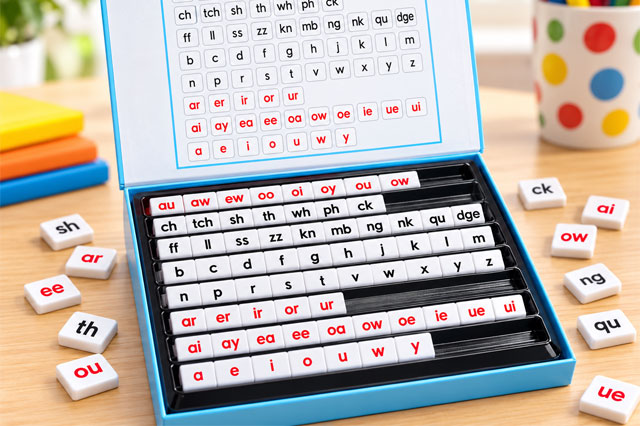
Improving Letter-Tile Printing Consistency
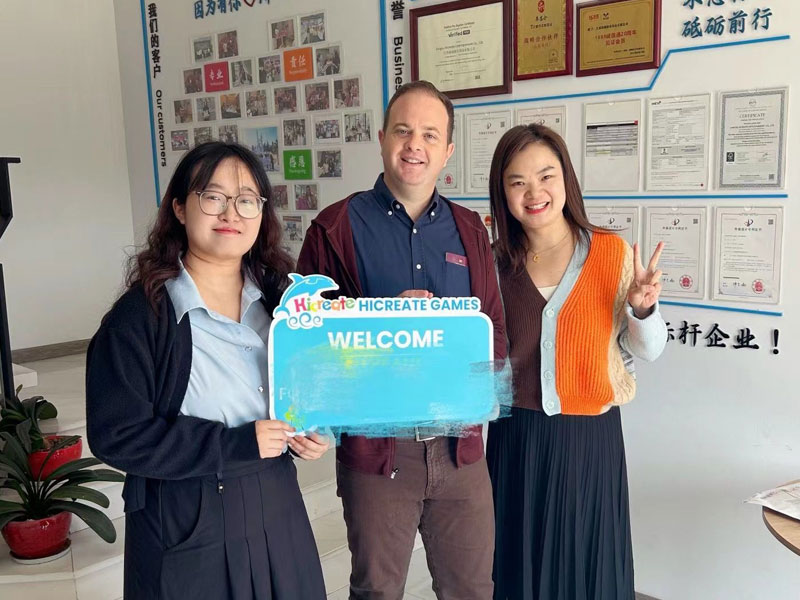
During the first prototype evaluation, we identified inconsistencies in the size and position of the printed letters. The client visited our factory to review the samples and discuss adjustments.
We then adjusted the printing parameters and produced a second prototype round.
- Standardized letter sizes across the tile set
- Corrected print placement and alignment
- Improved the visual consistency of the components
02
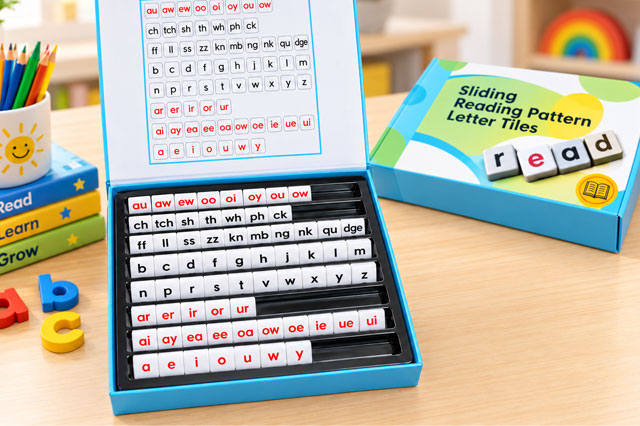
Developing a Tray Around the Components
The first insert did not hold the acrylic tiles securely enough. Movement inside the packaging created a risk of pieces rubbing against one another during transportation.
We recommended a custom plastic tray designed specifically for the product’s components and layout.
- A closer fit for the letter-tile arrangement
- A defined position for organizing the components
- Storage integrated with the overall box design
03
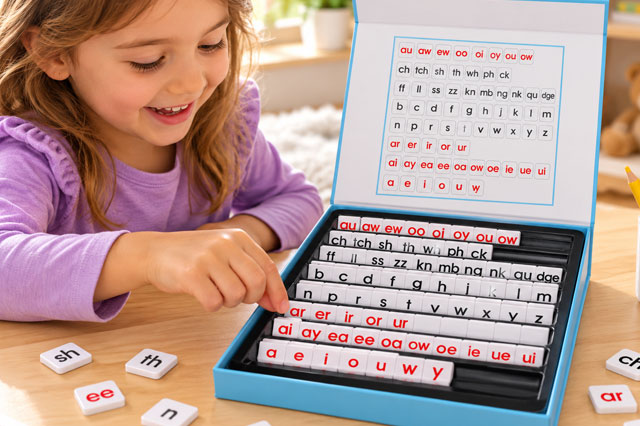
Creating a Clearer View with a Stepped Tray
The original tray placed every row at the same base height. From the front, the nearest tiles could obscure the rows behind them.
We redesigned the tray with different row heights: lower at the front and higher at the back.
Stepped layout concept · Not to scale
From Prototype Review to Production
Review & Refine
Review the working prototype with the client, then refine printing consistency, component storage and row visibility.
Confirm the Prototype
Bring the revised tiles, custom tray, booklet and magnetic flip-top box together for client approval before production.
Produce the Finished Kit
Manufacture against the approved sample and agreed schedule, with attention to the printing and packaging details resolved during development.
A More Consistent, Better-Organized Kit
Final results
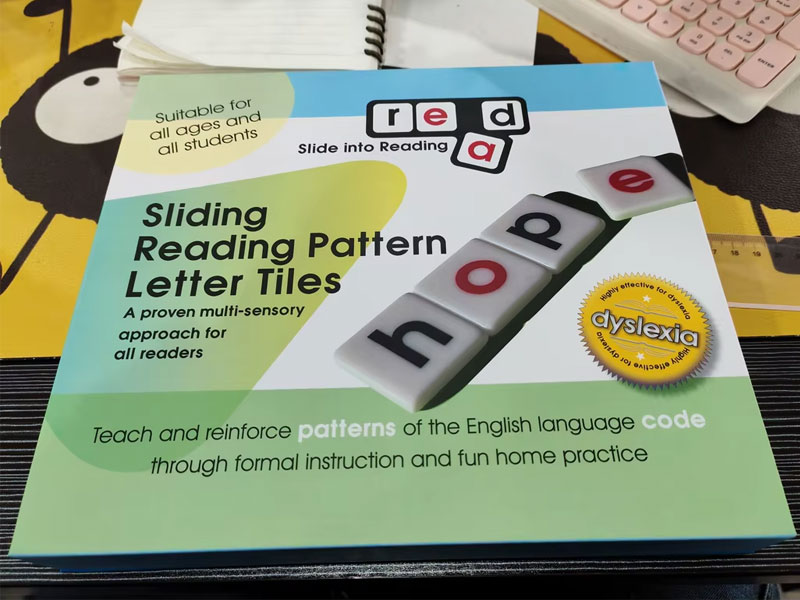
After the client approved the refined prototype, we completed production against the agreed schedule. The finished product combined improved printing consistency with a better-organized letter-tile arrangement.
- Consistent printing across the acrylic tiles
- Organized storage with improved row visibility
- A complete kit with a booklet and magnetic flip-top box
What the Client Shared
The client reported that teachers appreciated how easy the kit was to organize and carry for everyday teaching.
The feedback highlighted the practical value of considering the components, tray and box together during product development.
Literacy Game Manufacturing: Common Questions
What did Hicreate Games improve in this literacy game?
We refined acrylic letter-tile printing, developed a custom storage insert and redesigned the tray with stepped row heights. The work focused on visual consistency, organization and visibility before production.
How was printing consistency improved?
The team standardized letter sizing and adjusted printing parameters to improve print position and alignment across the acrylic tiles.
Why use a custom tray for a letter-tile game?
In this project, the first tray allowed tiles to move inside the box. A custom insert was developed around the component arrangement to support organized storage and a closer fit.
How does a stepped tray improve row visibility?
Lower front rows and higher rear rows reduce the obstruction caused by tiles in front. The stepped arrangement makes more of the letter-tile layout visible from the front.
What packaging was used for the finished literacy kit?
The kit combined acrylic letter tiles and a booklet with a custom plastic insert and a magnetic flip-top box. The insert and box were developed alongside the component arrangement.
What should I prepare for a similar manufacturing project?
Share your prototype or drawings, component list, artwork, intended age group, target markets and estimated quantity. These details help the team discuss materials, packaging, sample development and project requirements.
Developing a Hands-On Learning Product?
Bring your prototype, component list and packaging ideas. We can discuss the practical details that help move your educational game toward production.
Helpful starting points: prototype or drawings · component list · target markets · estimated quantity