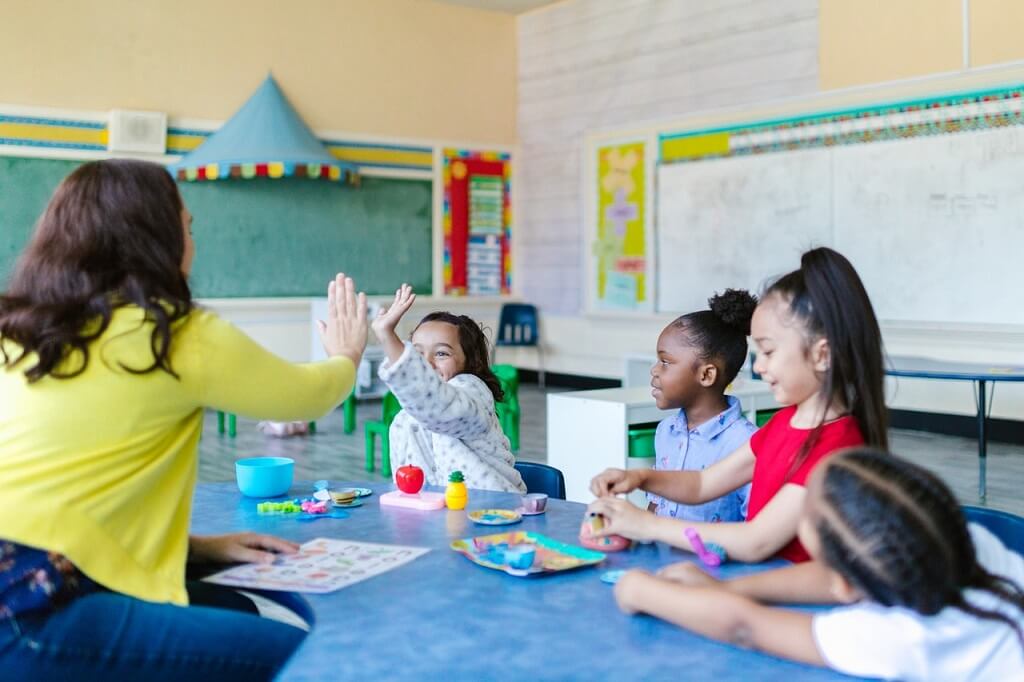
School-themed board games offer game designers an interesting challenge: the game needs to be engaging enough to feel like a real tabletop experience while also supporting learning, collaboration, creativity, or classroom discussion.
A successful school board game project should therefore go beyond simply turning quiz questions into cards. The strongest concepts combine educational objectives with meaningful game mechanics, giving players decisions to make, problems to solve, and reasons to interact with one another.
What Makes a Good Board Game for a School Project?

Before choosing a theme, it helps to think about what makes a school-oriented board game work.
A good educational board game usually balances four elements:
- A clear learning objective — What should players learn, practice, or understand?
- Simple but meaningful mechanics — Players should make decisions rather than simply roll dice and answer questions.
- Age-appropriate complexity — Rules, reading level, game length, and strategic depth should match the intended students.
- High replayability — Different cards, scenarios, maps, or player choices can make each session feel different.
The educational content should ideally become part of the gameplay itself.
For example, a geography game becomes more interesting when players must plan routes between countries than when they simply answer questions about capital cities. A science game can involve building ecosystems rather than memorizing definitions.
With that principle in mind, here are some board game ideas worth exploring.
1. Build a Sustainable City
Best for: Environmental science, geography, economics, and social studies
Players become city planners responsible for developing a growing community.
Each player or team receives a city board and must add residential areas, schools, hospitals, parks, factories, public transportation, renewable energy facilities, and other infrastructure.
The challenge is balancing several competing needs.
Building factories might generate jobs and tax revenue but increase pollution. Parks improve quality of life but occupy valuable land. Public transportation requires investment but can reduce traffic and emissions.
Possible mechanics include:
- Tile placement
- Resource management
- Budget allocation
- Environmental impact tracks
- Population growth
- Event cards
Events such as droughts, population increases, energy shortages, or economic recessions can force players to reconsider their plans.
Instead of simply teaching sustainability terminology, the game demonstrates how environmental, economic, and social decisions interact.
2. Journey Through the Human Body
Best for: Biology and health education
Turn the human body into an adventure map.
Players could begin in the mouth and travel through different biological systems, including the digestive, circulatory, respiratory, nervous, and immune systems.
Each region introduces different challenges.
For example, players might transport oxygen from the lungs, deliver nutrients to cells, fight infections, or navigate the digestive system.
Possible components include:
- Human-body game board
- Organ tiles
- Blood-cell tokens
- Nutrient tokens
- Virus or bacteria pieces
- Biology challenge cards
A cooperative format could work particularly well. Instead of competing against one another, players work together to keep the body functioning before a health track reaches zero.
3. Ecosystem Survival
Best for: Biology, ecology, and environmental science
Players build and maintain ecosystems using plants, herbivores, predators, water sources, and environmental resources.
Every species depends on other elements of the ecosystem.
If one species disappears, the effects may spread throughout the food web.
For example:
Plants → Rabbits → Foxes
If drought reduces plant populations, rabbits may decline, eventually affecting foxes as well.
Event cards could introduce:
- Drought
- Wildfires
- Invasive species
- Pollution
- Habitat destruction
- Conservation programs
- Seasonal changes
This creates a natural way to teach food chains, biodiversity, ecological balance, and environmental change through cause-and-effect gameplay.
4. Race Through World History
Best for: History and social studies
Instead of creating a standard history trivia game, designers can turn history into a timeline-building challenge.
Players collect historical events, inventions, people, and discoveries and attempt to place them correctly on a growing timeline.
Cards might include events such as:
- Construction of the Great Pyramid of Giza
- Invention of the printing press
- Industrial Revolution
- First powered airplane flight
- Moon landing
More advanced versions could introduce civilization cards, technological development, trade, wars, cultural movements, and political events.
The result can become part timeline game, part civilization-building experience.
5. Around the World Adventure
Best for: Geography
Create a world map where players travel between countries while completing missions.
A mission might require a player to:
- Visit three continents
- Reach a country with a specific climate
- Find a landlocked country
- Travel along a major river
- Visit countries where particular languages are spoken
Players must decide how to use limited transportation resources such as planes, trains, ships, or travel points.
This makes geography part of strategic route planning rather than simply a collection of questions.
6. Math Market
Best for: Elementary and middle-school mathematics
Turn mathematics into a marketplace.
Players operate small shops and must buy inventory, calculate prices, provide change, manage budgets, and make profitable decisions.
Different age groups can use different mathematical concepts.
Younger players might practice:
- Addition
- Subtraction
- Multiplication
- Money calculations
Older students could work with:
- Percentages
- Discounts
- Profit margins
- Fractions
- Interest
- Probability
Because the calculations affect players’ success in the game, mathematics becomes a tool for decision-making rather than an isolated exercise.
7. School Startup Challenge
Best for: Business, economics, entrepreneurship, and older students
Players become young entrepreneurs trying to build businesses.
Each begins with limited money and chooses a business concept, such as a café, clothing brand, tutoring service, game company, technology startup, or online store.
During the game, players make decisions about:
- Product development
- Pricing
- Marketing
- Hiring
- Inventory
- Customer satisfaction
- Investment
Unexpected event cards might introduce supplier delays, viral social media posts, new competitors, rising material costs, or sudden changes in demand.
The winner could be determined not simply by money but by a combination of profit, customer satisfaction, and company reputation.
8. Space Mission
Best for: Astronomy, physics, and STEM education
Players are space agencies preparing missions to explore the solar system.
Before launching, they must acquire the necessary spacecraft, fuel, scientific instruments, crew members, and technology.
Different destinations require different resources.
A Moon mission might be relatively inexpensive, while reaching Mars or the outer planets requires significantly more planning.
Mission cards could include objectives such as:
- Place a satellite in orbit
- Collect samples from Mars
- Study Jupiter
- Search for water
- Establish a lunar research station
Players learn about planets and space exploration while managing the risks and limitations of an actual mission.
9. Chemistry Lab Challenge
Best for: Chemistry
Players operate laboratories and compete to complete scientific experiments.
They collect element and compound cards and combine them according to specific objectives.
A simplified version could introduce basic concepts such as elements, molecules, acids, bases, and reactions.
Advanced versions could incorporate:
- Periodic table groups
- Chemical formulas
- Reaction balancing
- Laboratory equipment
- Temperature requirements
- Safety procedures
Experiment cards provide goals, while equipment and resource cards determine how efficiently players can complete them.
10. Vocabulary Quest
Best for: Language learning and English classes
Players explore a fantasy world where words become resources.
Instead of defeating enemies through combat, players overcome challenges by constructing sentences, identifying synonyms, completing vocabulary puzzles, or using specific words correctly.
Different card categories might include:
- Nouns
- Verbs
- Adjectives
- Synonyms
- Antonyms
- Definitions
- Sentence challenges
This format can also be adapted for foreign-language learning.
The key is making vocabulary useful within the adventure rather than interrupting gameplay with traditional quiz questions.
11. Ancient Civilization Builder
Best for: History and social studies
Each player develops an ancient civilization.
Players must balance resources such as:
- Food
- Population
- Trade
- Military strength
- Technology
- Culture
They can construct farms, temples, roads, markets, defensive structures, and monuments.
Civilization cards could introduce historical concepts inspired by Ancient Egypt, Greece, Rome, Mesopotamia, China, or the Maya.
Rather than memorizing isolated historical facts, students explore why agriculture, trade, geography, government, and technology mattered to civilization development.
12. Renewable Energy Challenge
Best for: Environmental science and STEM
Players must power a community using different energy technologies.
Available options could include:
- Solar
- Wind
- Hydroelectric
- Geothermal
- Nuclear
- Fossil fuels
Each source has different costs, reliability, output, and environmental consequences.
Weather cards make the system more dynamic. Solar production may fall during cloudy periods, while wind farms may produce less electricity during calm weather.
Players therefore need diversified energy systems rather than simply choosing the “best” energy card.
13. Disaster Response Team
Best for: Geography, environmental science, and teamwork
Players form an emergency response team dealing with natural disasters.
Scenarios could involve:
- Earthquakes
- Floods
- Hurricanes
- Wildfires
- Volcanic eruptions
Players have limited resources such as rescue teams, vehicles, medical supplies, shelters, and food.
Because resources are scarce, they must prioritize where help is needed most.
A cooperative structure makes the concept particularly suitable for classrooms because players must discuss their decisions and develop a response plan together.
14. Fraction Pizza Shop
Best for: Elementary mathematics
Pizza naturally provides a visual way to teach fractions.
Players run pizza restaurants and receive customer orders such as:
½ cheese + ¼ mushrooms + ¼ pepperoni
They must assemble pizza pieces that correctly represent each fraction.
More advanced cards could introduce:
- Equivalent fractions
- Adding fractions
- Subtracting fractions
- Percentages
- Ratios
Physical pizza tiles make the mathematical relationships visible, which can be particularly effective for younger learners.
15. Shape Architect
Best for: Spatial reasoning, visual logic, geometry, and problem-solving
In Shape Architect, players must construct specific structures using geometric pieces—but they are not shown the complete solution.
Instead, they receive partial visual or logical clues.
For example, a challenge might say:
- The red triangle must touch the blue square
- The yellow piece cannot be placed on an edge
- The circle must be above the rectangle
- Exactly two pieces can touch the green block
- The blue square must be in the bottom row
Players then arrange physical tiles or blocks until every condition is satisfied.
Beginner challenges could use simple 2D shapes on a small grid, while advanced challenges might involve three-dimensional structures.
Possible components include:
- Geometric tiles
- Wooden or plastic building blocks
- Grid boards
- Challenge cards
- Condition cards
- Pattern cards
- Solution cards
Some challenges could have one correct solution, while others might allow several valid solutions.
A competitive version could have players race to complete the same puzzle. A cooperative version could give different players different clues, forcing them to communicate and combine information.
This makes the game especially useful for developing spatial visualization, constraint-based reasoning, pattern recognition, and the ability to mentally manipulate objects.
It can also connect naturally with mathematics and geometry lessons.
Final Thoughts
The best board game ideas for school projects do more than place educational questions on top of familiar board game mechanics.
They turn the subject itself into gameplay.
Geography can become exploration. Economics can become resource management. Biology can become ecosystem building. History can become civilization development. Science can become experimentation. Mathematics can become business decisions.
For board game designers, that creates a much larger creative space.
Start by identifying what students should understand. Then ask:
What decisions, challenges, and interactions would allow players to experience that idea through play?
When the educational objective and the game mechanic reinforce each other, a school project can evolve from a simple classroom activity into a board game that students genuinely want to play.