A well-designed board game is not automatically a fundable board game.
Every year, talented designers bring polished prototypes, attractive artwork, and years of playtesting to Kickstarter—only to watch their campaigns stall. Other projects raise impressive sums but collapse during production, leaving backers without the games they supported.
According to Kickstarter’s 2024 Games Report, 6,646 tabletop game projects launched in 2024, and 5,314 were successfully funded. That 80% success rate was the highest in the platform’s history, but it still means that roughly 1,332 tabletop projects did not secure funding. Moreover, funding success does not measure whether a game was produced profitably or delivered to backers.
The game quality is only one part of crowdfunding success. A campaign must also offer clear positioning, credible pricing, an existing audience, disciplined production planning, and consistent communication.
The following real campaigns show how good games fail—and what future creators can learn from them.
Real-World Examples of Board Game Kickstarter Crowdfunding Failures
| Project | Type of Failure | Public Outcome | Key Lesson |
|---|---|---|---|
| Carnival of Monsters | Cancelled by creator | €52,751 of €222,000; 23% funded | Even Richard Garfield’s reputation could not overcome an ambitious funding goal and an unclear crowdfunding value proposition. |
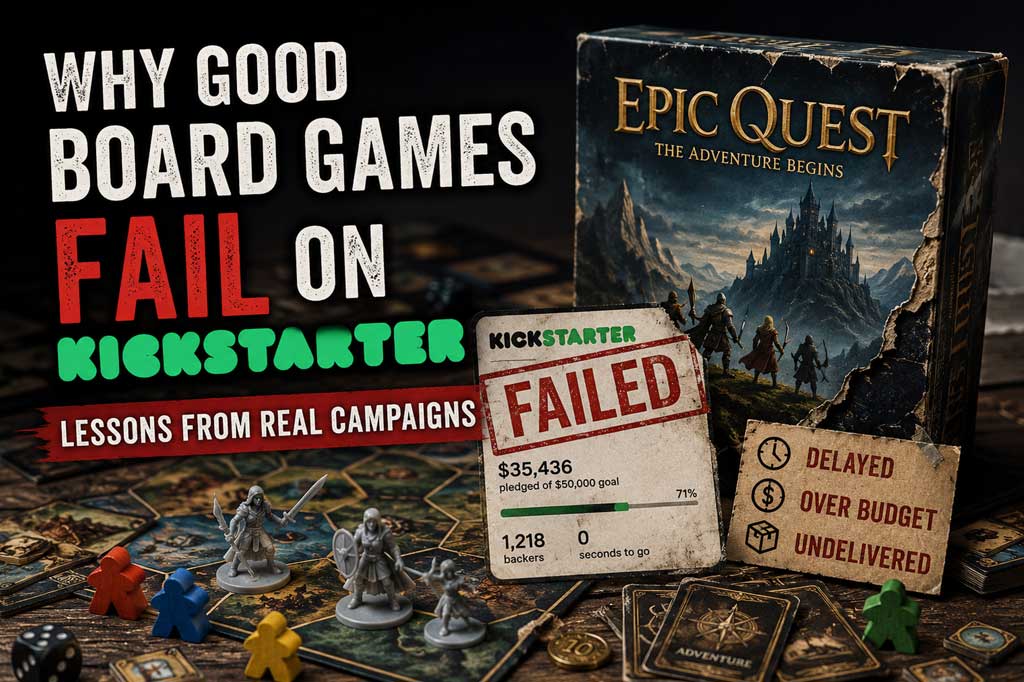
| Pathfinder Revolution! | Cancelled by creator | $35,436 of $50,000; approximately 70% funded | A failed crowdfunding campaign does not necessarily mean a failed product. The game was later released through traditional channels. |
| Highways & Byways | Funding unsuccessful | $4,538 of $15,000 funded | The creator attributed the failure to a lack of clearly defined target players and an unavoidably high price. |
| Get Off My Land! | Funding unsuccessful | CA$ 61,376 of CA$ 28,800 funded | A rushed launch, an incorrect MSRP calculation, an expensive pledge level, and an overly high funding goal contributed to the failure. |
| Tau Ceti | Funding unsuccessful | Relaunch raised more than $100,000 | The successful relaunch focused on building an audience in advance, setting an attainable goal, improving the campaign presentation, and communicating with backers. |
| Super Dungeon Explore: Legends | Funded but not delivered | Approximately $1.3 million from more than 6,600 backers | Rebuilding the rules increased the project’s scope and costs. The campaign exhausted its funds, required an estimated additional $750,000, and its publisher eventually filed for bankruptcy. |
| Darkest Dungeon: The Board Game | Partially fulfilled | Raised approximately $5.7 million | Overfunding and a well-known IP could not offset the risks created by complex production, extensive additional content, and the publisher’s financial problems. |
1. A Good Game Still Needs a Specific Audience
One of the most common crowdfunding mistakes is assuming that a game is suitable for “everyone.”
That description may sound inclusive, but it gives potential backers very little reason to care. Kickstarter visitors make fast decisions. They need to understand who the game is for, what experience it delivers, and why they should choose it over hundreds of competing products.
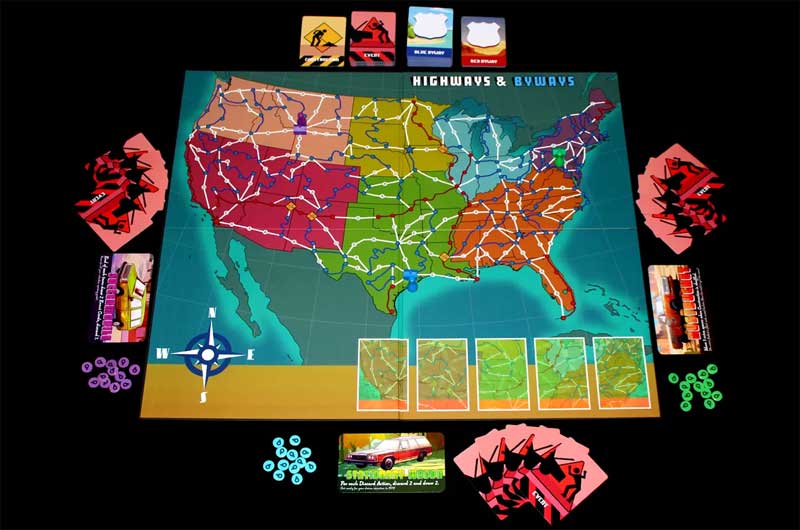
The creator of Highways & Byways, Brandon Rollins, wrote an article titled “Why the Highways & Byways Kickstarter Campaign Crashed & Burned,” which described the project as a game made without a sufficiently specific audience. Its price was also too high for the experience being offered. Although the designer believed in the game, its product-market fit was unclear.
A campaign should be able to complete a sentence such as:
“This is a 60-minute cooperative adventure for couples and small groups who want strategic choices without a long setup.”
That is much stronger than saying the game is “fun for casual and experienced players alike.”
Creators should define their ideal backer before designing advertisements or writing campaign copy. Player count, playtime, complexity, theme, interaction style, and comparable games all help potential backers recognize whether the product is meant for them.
2. The Funding Goal Can Become a Psychological Barrier
A Kickstarter funding goal must cover actual production costs, but it also influences backer behavior.
When a project reaches a meaningful percentage of its target quickly, it creates momentum and social proof. Visitors see that other people believe in the campaign, reducing the perceived risk of pledging. When a project remains far from its goal, potential backers may conclude that it is unlikely to succeed and decide not to participate.
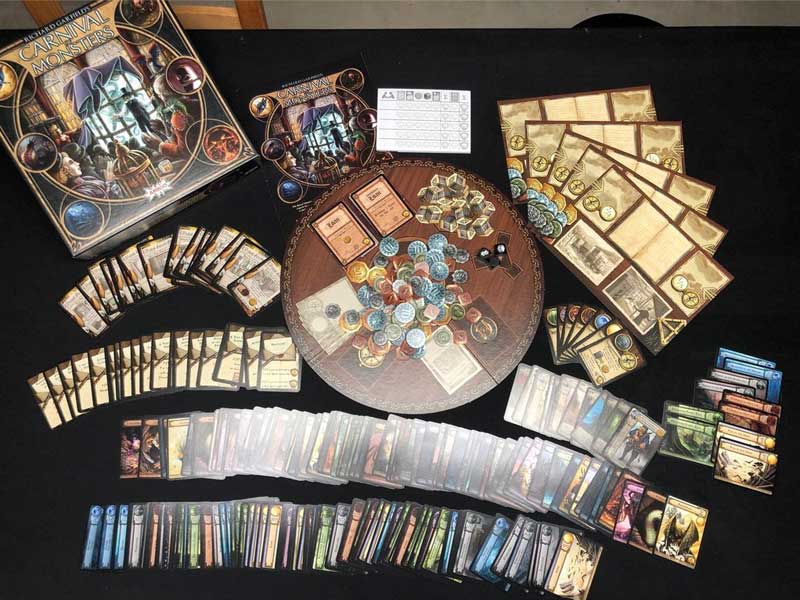
Richard Garfield’s Carnival of Monsters demonstrates that reputation alone cannot overcome this problem. The campaign had an internationally recognized designer, professional artwork, reviews, and support from an established publisher. Nevertheless, it was canceled after raising €52,751 of its €222,000 goal—approximately 23%—from 838 backers.
The result does not prove that the game was bad. It suggests that the goal, campaign structure, and perceived value did not align strongly enough to produce the required momentum.
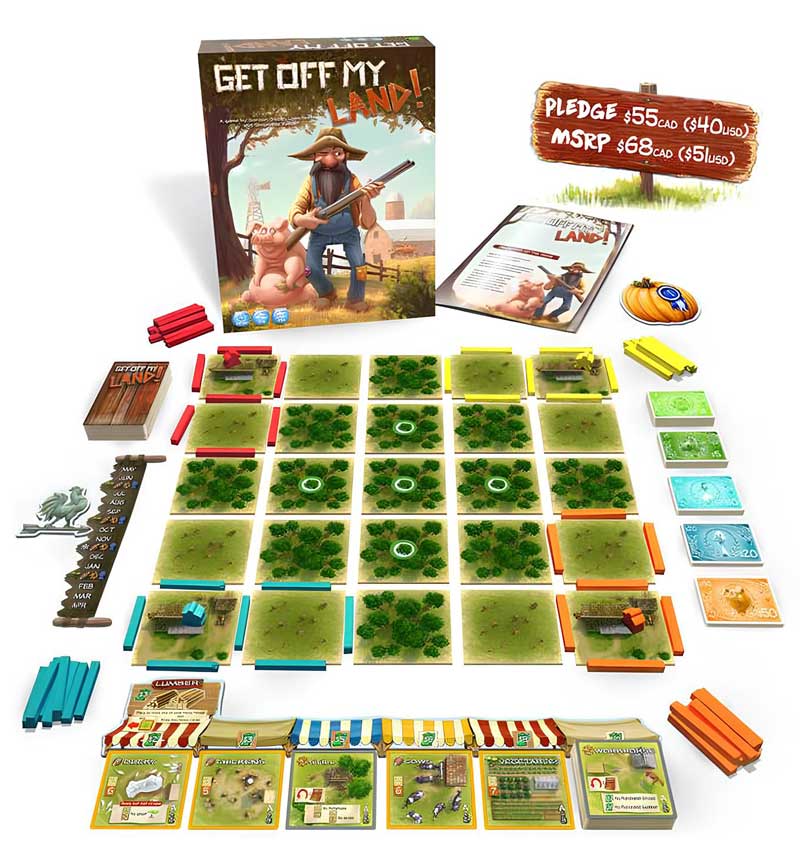
The first campaign for Get Off My Land! encountered a similar issue. Its creators later explained that they had rushed the launch, miscalculated the expected retail price, priced the pledge too high, and set an unnecessarily conservative funding goal. After analyzing those mistakes, they reworked the campaign.
A funding goal should be based on verified costs, but it must also be realistic relative to the audience available on launch day.
3. Kickstarter Is the End of Marketing, Not the Beginning
Many first-time creators expect Kickstarter to provide their audience. Although the platform can generate organic discovery, it rarely creates sufficient demand from nothing.
A campaign should launch with an existing group of people ready to pledge. That audience might come from an email list, convention demonstrations, a BoardGameGeek community, social media, Discord, reviewers, local gaming groups, or a previous product.
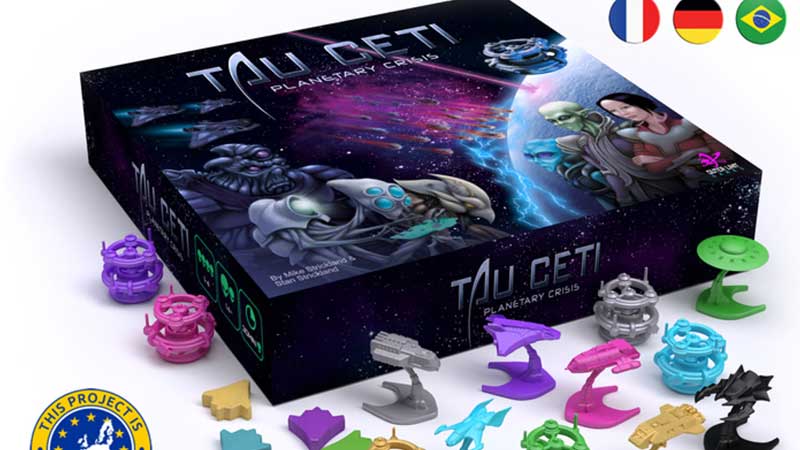
The first Kickstarter campaign for Tau Ceti failed, but its relaunch later raised more than $100,000 (Podcast – How to Turn Kickstarter Failure into $100K+ Success with Mike Strickland). Designer Mike Strickland identified four important improvements:
- Build a crowd and create interest before launch.
- Set an attainable funding goal.
- present the game professionally.
- Communicate consistently with backers.
The team also recommended knowing how many people were realistically prepared to support the core product during the campaign’s first 48 hours.
A large social media following is not necessarily enough. An email subscriber who has requested a launch notification is generally more valuable than a casual follower who merely liked an illustration six months ago.
Before launching, creators should test whether interest can be converted into action. Landing-page sign-ups, paid reservations, prototype requests, and convention pre-commitments provide stronger evidence than likes or impressions.
4. Backers Buy an Experience, Not a List of Components
Campaign pages often devote enormous space to miniatures, tokens, card counts, and stretch goals. These elements are visually impressive, but they do not automatically explain why the game is enjoyable.
Within the first section of the page, a visitor should understand:
- What players do during a turn
- What makes the decisions interesting
- How players interact
- How long the game takes
- What differentiates it from similar titles
- Whether the game has actually been playtested
Artwork attracts attention, but gameplay creates confidence. A campaign becomes much stronger when it includes an accessible rulebook, a complete playthrough, independent previews, prototype photography, and a concise explanation of the central decision loop.
This is especially important for unknown designers. Backers cannot rely on the creator’s reputation, so the campaign must provide visible proof that the game exists beyond concept art.
5. Crowdfunding Failure Does Not Always Mean Product Failure
A failed campaign can indicate weak demand, but it can also expose a mismatch between crowdfunding economics and traditional publishing.
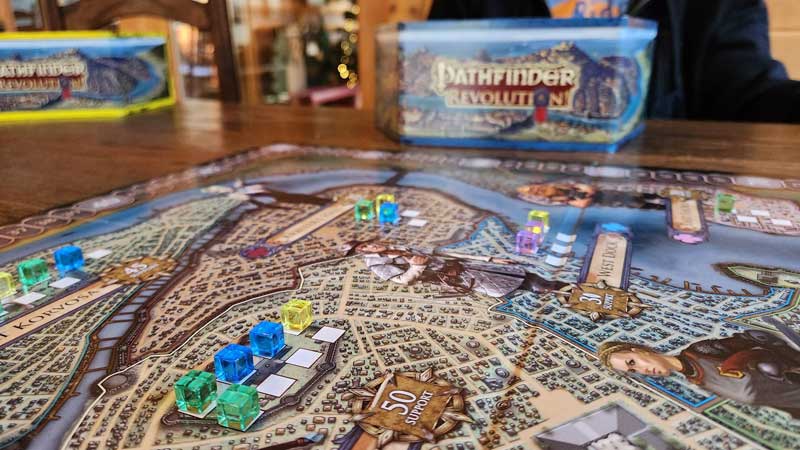
Pathfinder Revolution! raised $35,436 toward a $50,000 target before its Kickstarter was canceled. That looked like a crowdfunding failure. However, Steve Jackson Games later produced and released the game through other channels. (Wargamer’s report – Pathfinder board game arrives despite failed Kickstarter)
The lesson is important: Kickstarter tests a particular offer at a particular price, on a particular platform, during a particular period. It does not deliver a final verdict on the game itself.
A campaign may fail because:
- The minimum manufacturing quantity is too high.
- The funding goal appears unreachable.
- The pledge is not attractive compared with the expected retail edition.
- The audience prefers retail purchasing to crowdfunding.
- The campaign launched at the wrong time.
- The publisher already has better financing or distribution options.
Creators should therefore separate feedback about the game from feedback about the offer. If visitors like the prototype but will not pledge at the campaign price, the design may not be the primary problem.
6. Raising More Money Can Create More Risk
The opposite form of failure occurs after a campaign exceeds its goal.
More funding means more backers, more products, more destinations, and more expectations. Stretch goals add new miniatures, language editions, expansions, packaging formats, and manufacturing dependencies. Revenue grows, but operational complexity may grow even faster.
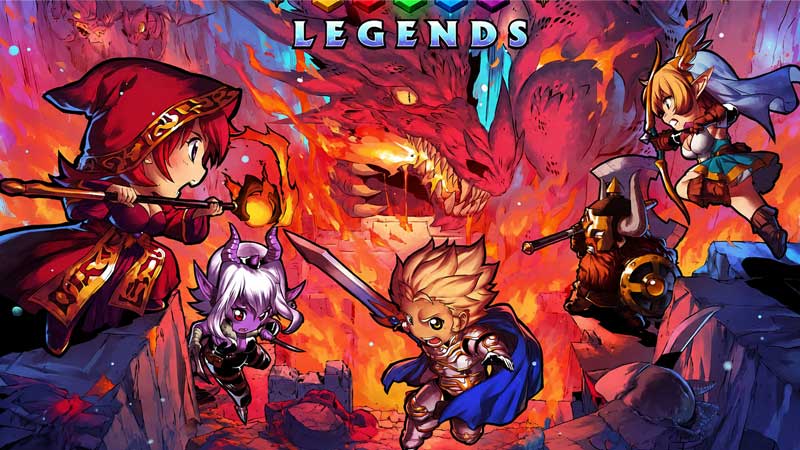
Super Dungeon Explore: Legends raised almost $1.3 million from more than 6,600 backers. It was scheduled for delivery in December 2016, but the game was never delivered. According to later BoardGameWire reporting – “Thousands of Kickstarter backers left out of pocket as Super Dungeon Explore publisher Ninja Division files for bankruptcy“, the team discarded and rebuilt the rules after receiving an unenthusiastic response to the original version. This extended development, increased costs, and contributed to the exhaustion of campaign funds. The company estimated that it needed another $750,000 to complete the project and eventually filed for bankruptcy.
The game had not failed to attract customers. It had failed to control scope, development, and production.
Every stretch goal should be treated as a new financial obligation. Before announcing one, creators should calculate its effect on development time, manufacturing, assembly, box size, freight, fulfillment, replacement parts, and customer support.
7. Funding Is Not the Finish Line
Creators sometimes approach launch day as the culmination of the project. In reality, it marks the beginning of the most difficult phase.
After funding, the creator must finalize files, manufacture components, manage quality control, arrange freight, handle customs, fulfill thousands of individual orders, replace damaged products, and communicate through inevitable delays.
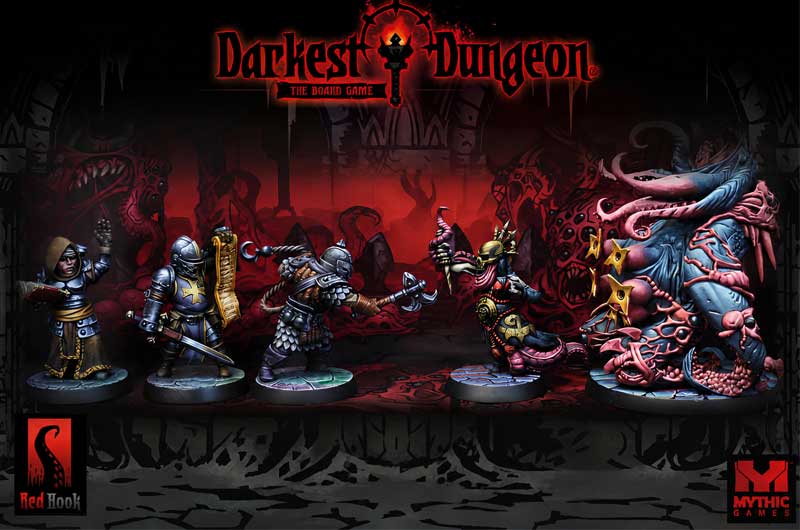
Even famous intellectual properties and highly funded campaigns can fail during this stage. Darkest Dungeon: The Board Game raised approximately $5.7 million, but part of the promised content was never delivered after publisher Mythic Games became unable to complete manufacturing and fulfillment.
Kickstarter identifies underbudgeted shipping, complicated reward structures, unrealistic schedules, uncontrolled stretch goals, and poor communication as recurring reasons that funded projects collapse.
Creators should obtain written manufacturing and fulfillment quotes before setting pledge prices. Budgets should account for platform fees, payment failures, taxes, packaging, storage, customs, replacement inventory, and contingency reserves.
8. Silence Turns Delays Into Reputation Crises
Most experienced backers understand that manufacturing delays happen. What they find much harder to accept is silence.
When creators stop posting updates, backers lose the ability to distinguish between a manageable delay and a collapsing company. Speculation replaces information, refund requests increase, and the creator’s reputation may become impossible to repair.
An effective update does not need to contain good news. It needs to contain specific information:
- What has been completed
- What remains unfinished
- What caused the delay
- What corrective action is being taken
- When the next update will appear
A short, honest monthly update is more valuable than a polished announcement that arrives after months of silence.
Conclusion
Good board games fail on Kickstarter because Kickstarter is not simply a game-design competition. It is a compressed test of product positioning, audience development, pricing, storytelling, financial planning, manufacturing, logistics, and trust.
A failed campaign does not necessarily mean that a game lacks value. Sometimes it means the offer was wrong, the audience was not ready, or the business plan could not support the product. Creators who understand that distinction can use failure as market feedback—and return with a campaign that is not only fundable, but deliverable.