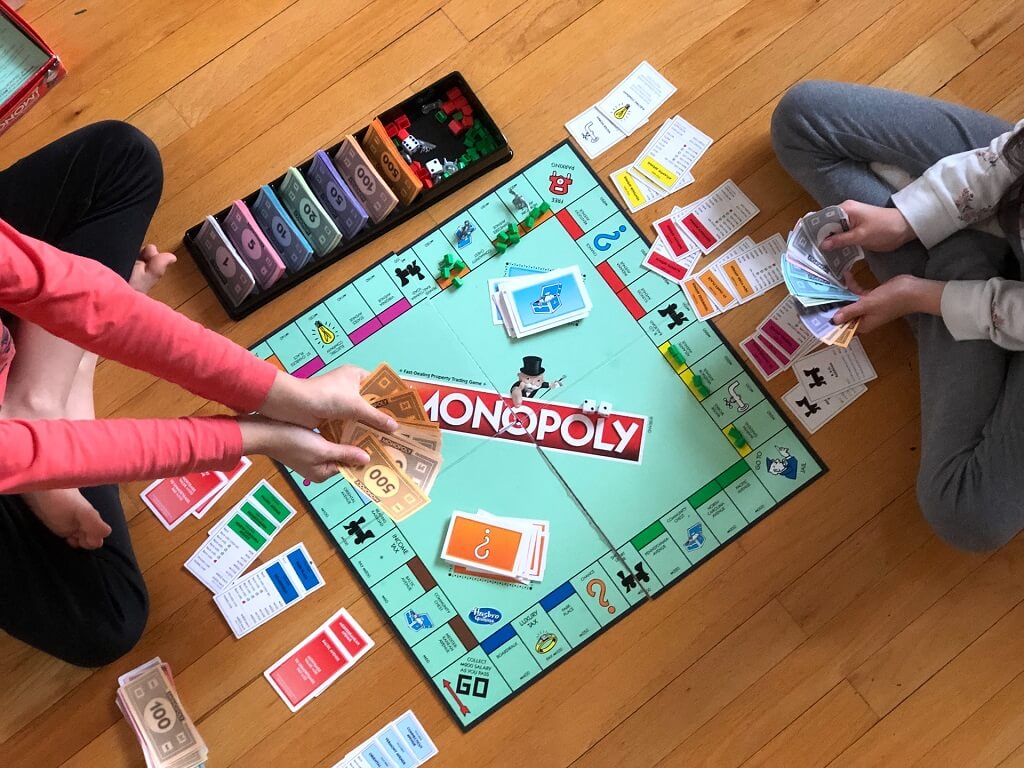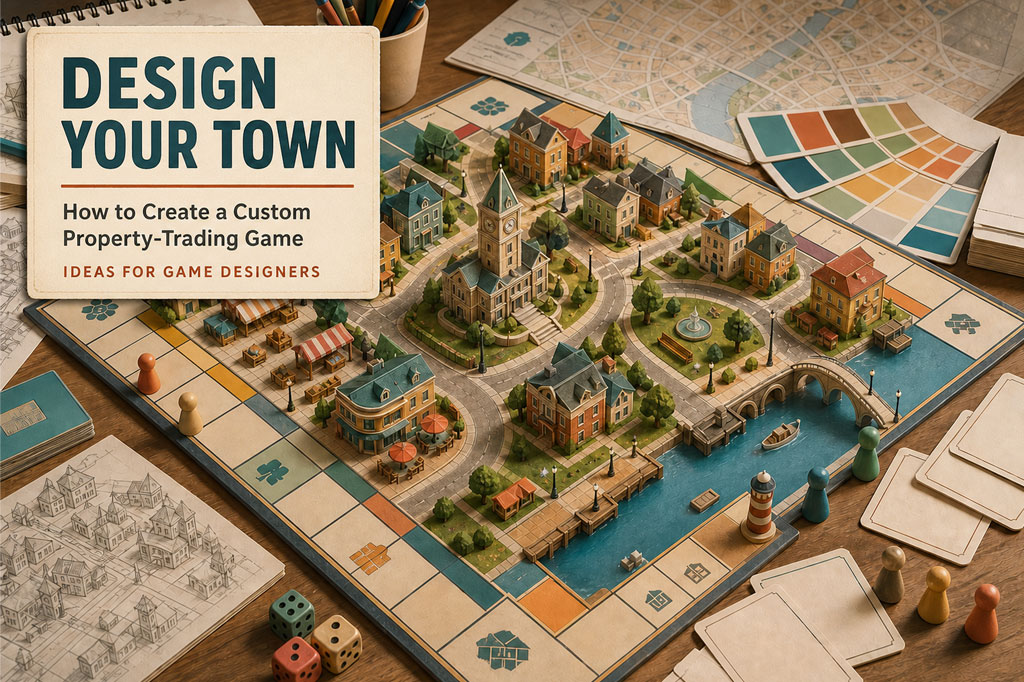
Designing a board game around a real town or city is more than replacing fictional properties with local street names. The most memorable games capture the personality of a place: its neighborhoods, landmarks, rivalries, businesses, history, humor, and everyday experiences.
For game designers, this kind of project offers an unusual creative challenge. The Monopoly setting is already familiar to the players, but it still needs to be transformed into an engaging game world. Every location must serve both a thematic purpose and a mechanical one.
Here are some ideas for turning a real town or city into a distinctive property-trading board game.
Start With the City’s Core Story
Before choosing streets or designing the board, ask one important question:
What story does this place naturally want to tell?
Two towns of similar size may produce completely different games. A coastal city could focus on tourism, fishing, ports, and changing weather. A historic town might revolve around preservation, heritage, and local festivals. A fast-growing suburb could emphasize development, transportation, and competition for new commercial districts.
Possible creative directions include:
- Building a local business empire
- Revitalizing neglected neighborhoods
- Competing to attract tourists
- Developing a sustainable city
- Preserving historic landmarks
- Preparing the town for a major festival
- Connecting districts through public transportation
- Becoming the city’s most influential entrepreneur
A clear central story gives the designer a filter for every later decision. If the game is about sustainable development, for example, adding parks and public transport should matter mechanically—not merely appear as decoration.
Treat the Map as Inspiration, Not a Restriction
A real city map rarely translates neatly into a board-game layout. Important locations may be clustered together, while some districts may offer little gameplay variety.
Instead of reproducing the geography exactly, create a playable interpretation of the city.
Locations can be organized by:
- Neighborhood
- Historical period
- Property value
- Cultural importance
- Tourist popularity
- Business category
- Distance from the town center
- Transportation route
- Emotional significance to residents
The board can still suggest a journey through the city without functioning like a literal street map. Players might begin in the historic center, move through residential districts, enter shopping and entertainment areas, and eventually reach premium waterfront or business properties.
Think like a storyteller rather than a cartographer. The goal is recognition, rhythm, and progression.
Curate the City Instead of Cataloging It
One of the most difficult design decisions is determining which places belong on the board.
Trying to include every notable street, business, school, and landmark will create a crowded and unfocused game. A stronger approach is to select locations that represent different aspects of local life.
A balanced location list might include:
- A famous landmark
- A historic building
- A popular park
- A shopping street
- A sports venue
- A local market
- A train or bus station
- A waterfront or scenic area
- A university or school district
- A well-known restaurant area
- An industrial or business district
- A location connected to a local legend
Each location should contribute something different. Ask whether it creates recognition, conversation, strategic value, or a useful contrast with other spaces.
Designers can also conduct short interviews with residents. Questions such as “Where do locals meet?”, “Which street has changed the most?” and “What place would people be upset not to see?” often reveal better ideas than a standard list of tourist attractions.
Give Every Neighborhood a Mechanical Identity
Color groups or property sets should feel like genuine districts rather than arbitrary collections of streets.
For example:
- The historic district could contain inexpensive properties with preservation bonuses.
- The arts district could reward players for collecting event cards.
- The waterfront could be expensive but vulnerable to weather effects.
- The university district could offer discounts on future upgrades.
- The commercial center could generate strong income but have higher maintenance costs.
- The suburban district could grow in value as transportation links are developed.
This approach makes neighborhoods memorable because players experience their personalities through the rules.
A useful design test is to hide the district names and ask whether the mechanics still communicate their character. If every property behaves in the same way, the local setting is only cosmetic.
Reimagine Property Development
The familiar progression from an undeveloped property to houses and hotels works well, but a custom city game can use development stages that better fit its theme.
Possible alternatives include:
- Pop-up shop → local store → regional attraction
- Empty lot → community space → major landmark
- Food stall → café → destination restaurant
- Workshop → factory → innovation center
- Guesthouse → boutique hotel → luxury resort
- Bike stop → transit hub → central station
- Local event → annual festival → international celebration
Development could also involve choices rather than a single linear upgrade path. A player might decide whether to turn a waterfront property into a hotel, public park, or entertainment venue. Each option could produce different income, reputation, or end-game scoring.
Branching development gives designers an opportunity to express real debates about how a city should grow.
Build a Local Economy
Money does not have to represent rent alone. It could represent influence, visitors, community support, business revenue, or development points.
Designers can create a richer economy by introducing different ways to benefit from locations. A public park might generate little direct income but increase the value of nearby properties. A transportation station could earn money whenever another player moves through it. A stadium might become especially valuable when an event card is active.
Consider adding systems such as:
- Tourism seasons
- Local business partnerships
- Property maintenance
- Public projects
- Neighborhood popularity
- Citywide economic events
- Sustainability ratings
- Resident satisfaction
- Cultural influence
However, avoid adding systems simply because they sound realistic. Every mechanism should produce interesting decisions or meaningful interaction.
Turn Local Life Into Event Cards
Event cards are one of the best places to express a town’s personality. They can reference experiences that residents immediately recognize while also changing the state of the game.
Examples include:
- “The annual street festival begins. Properties in the town center earn double income this round.”
- “Road construction causes delays. Move back three spaces.”
- “Your restaurant is featured in the local newspaper. Collect a promotion bonus.”
- “Heavy rain cancels the outdoor market.”
- “The local team wins the championship. Businesses near the stadium receive additional visitors.”
- “A new bus route opens. Travel directly to any transit property.”
- “You volunteer at a community event. Gain reputation, but miss your next business action.”
- “Tourist season arrives early. Waterfront properties increase in value.”
Local humor can make these cards especially memorable. Inside jokes, regional expressions, weather complaints, traffic habits, and famous annual events all help the game feel authentic.
The humor should remain welcoming, however. Players unfamiliar with the town should still understand what is happening.
Design Tokens That Tell Miniature Stories
Player pieces are another opportunity to move beyond generic components.
A city-themed game might use tokens based on:
- A local animal or mascot
- A bus, tram, bicycle, or ferry
- A famous food
- A historic object
- A lighthouse, bridge, or tower
- A sports symbol
- A market basket
- A camera representing tourism
- A construction helmet representing development
Tokens can also have unique abilities. A bicycle may move efficiently between park spaces, while a camera earns bonuses at landmarks. A market basket might receive discounts at commercial properties.
Asymmetric abilities increase replayability, but they also introduce balancing challenges. Keep the powers simple and connect them clearly to the object each token represents.
Use Routes and Movement to Reflect the City
Roll-and-move is familiar, accessible, and suitable for family audiences, but designers can introduce more control without losing that accessibility.
Possible movement ideas include:
- Bus routes that connect distant districts
- Train stations that allow fast travel
- Ferry routes across waterfront areas
- Bicycle paths that provide shortcuts
- Traffic cards that temporarily block streets
- Walking routes that are slower but provide community bonuses
- Transport tickets that players can collect and spend
The board itself does not have to be a single rectangular track. Designers might experiment with a connected district map, branching roads, circular transit lines, or a central city hub surrounded by neighborhoods.
The movement system should express what traveling through the real city feels like.
Create Interaction Beyond Charging Rent
Traditional property-trading games often depend heavily on ownership and payment. A custom design can introduce other forms of interaction.
Players might:
- Negotiate business partnerships
- Cooperate on public projects
- Bid for development rights
- Sponsor local festivals
- Vote on city policies
- Share transportation infrastructure
- Compete for tourist attractions
- Form temporary neighborhood alliances
- Trade resources as well as properties
A semi-cooperative system can be particularly suitable for a community game. Players may compete for individual success while working together to prevent the city from losing too much resident satisfaction or environmental quality.
This creates an appealing tension: everyone wants to win, but nobody wants the town to fail.
Let the Visual Design Communicate Place
A local board game should be recognizable even before players read the location names.
Build a visual system from the city’s:
- Architecture
- Street signs
- Natural landscape
- Public transportation
- Local colors
- Historic patterns
- Cultural symbols
- Seasonal atmosphere
Illustration often works better than photography because it allows different locations to share a consistent style. Designers can simplify landmarks into bold silhouettes, create small neighborhood scenes, or use a stylized map as the foundation of the board.
Avoid filling every space with detail. A crowded board makes navigation difficult. Local character should support usability rather than compete with it.
Prototype With Residents and Outsiders
Local residents are essential playtesters because they can evaluate authenticity. They will notice missing landmarks, incorrect details, and references that do not feel natural.
But residents should not be the only testers.
People unfamiliar with the city can reveal whether the game is understandable without local knowledge. A successful custom town game should work on two levels:
- Residents enjoy recognition and shared memories.
- Visitors enjoy discovering the city through play.
During testing, ask more than whether players had fun. Observe which locations they remember, which districts feel different, whether local references affect decisions, and whether the game creates conversation about the town.
Use These Creative Prompts
When the design process slows down, try completing these sentences:
- “Everyone in this town knows that…”
- “Visitors always take photos of…”
- “Residents constantly complain about…”
- “The city completely changes when…”
- “No visit is complete without…”
- “The biggest rivalry in town is between…”
- “This neighborhood feels different because…”
- “A perfect day here would include…”
- “The town’s most surprising story is…”
- “If this landmark disappeared, people would miss…”
The answers can inspire properties, cards, tokens, mechanics, illustrations, and even victory conditions.
Make the Town Playable
Creating a Monopoly-style board game based on cities or towns should not merely display local names. They translate the rhythms and personality of a place into decisions, risks, rewards, and player interactions.
A designer should aim for a game in which the town is not just the background—it is the system. Its geography shapes movement, its industries shape the economy, its traditions create events, and its neighborhoods offer different strategies.
When players finish, they should feel that they have not only bought and developed properties. They should feel that they have experienced a playful version of the town itself.
That is what turns a customized property-trading game into something residents want to own, share, and play again.