Trading card games are unusually difficult businesses to launch. A new TCG must attract players and collectors simultaneously, manufacture a large assortment of cards, establish retail distribution, support organized play, and release expansions frequently enough to maintain interest.
Kickstarter can reduce some of that uncertainty. It combines product launch, demand forecasting, customer acquisition, and market validation in a single campaign.
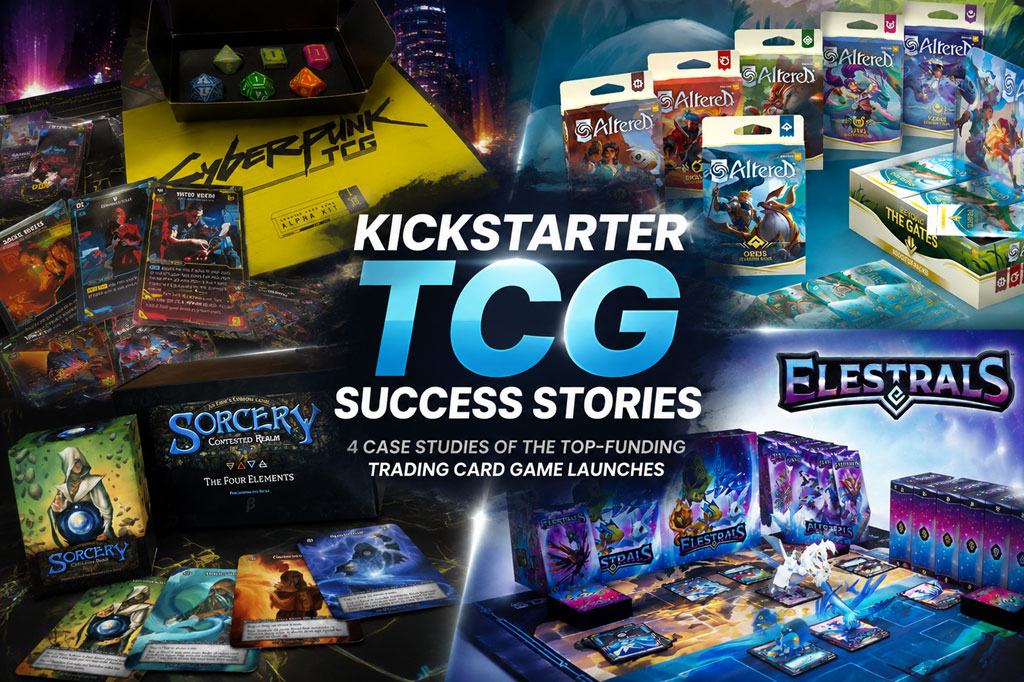
This case study examines four of Kickstarter’s most successful TCG launches by funds raised:
| Campaign | Funds raised | Backers | Approx. pledge per backer |
|---|---|---|---|
| 1. The Official Cyberpunk TCG | $28.35 million | 50,773 | $558 |
| 2. Altered | €6.21 million ($6.73 million) | 14,997 | €414 |
| 3. Sorcery: Contested Realm | NZ$5.78 million ($4.02 million) | 6,456 | NZ$896 |
| 4. Elestrals | $1.47 million | 7,530 | $195 |
Currency differences mean this is not a perfectly normalized ranking. Nevertheless, the campaigns represent four revealing models: blockbuster licensing, product innovation, premium artistic differentiation, and creator-led community building.
1. The Official Cyberpunk TCG
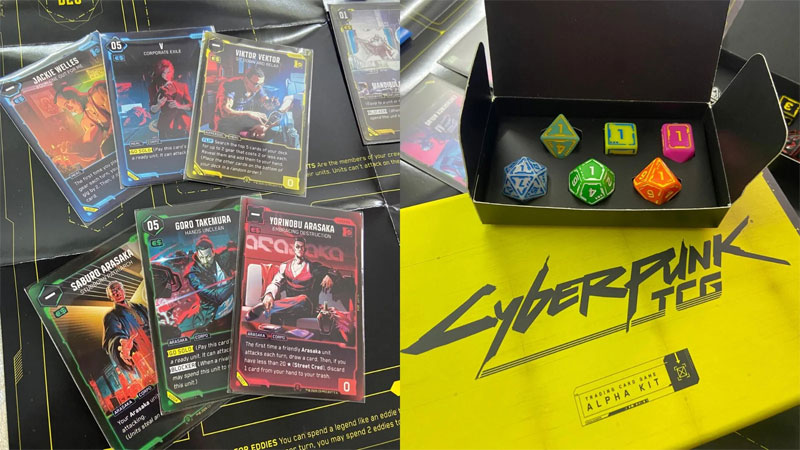
Launched by WeirdCo in collaboration with CD PROJEKT RED, The Official Cyberpunk Trading Card Game became the largest TCG campaign—and the largest tabletop-game crowdfunding campaign—on record. It raised $28,353,088 from 50,773 backers against a $100,000 goal. Its first set, Welcome to Night City, draws from Cyberpunk 2077, while later content incorporates Cyberpunk: Edgerunners.
The obvious advantage was intellectual property. Cyberpunk already possessed a global audience, recognizable characters, a strong visual identity, and an established merchandise market. WeirdCo therefore did not have to create awareness from zero.
However, the campaign did more than attach a famous name to booster packs. Its central proposition addressed a genuine TCG-market frustration: desirable products are often purchased by speculators before ordinary players can obtain them at retail prices. WeirdCo presented crowdfunding as a direct-access mechanism—people who backed the campaign were guaranteed product.
Kickstarter also functioned as a demand-forecasting system. According to the company, its pre-launch page had accumulated more than 48,000 followers. Campaign data could subsequently guide print quantities, localization, retail allocation, and regional organized-play investment. WeirdCo also funded a limited alpha print run, distributing it to creators for feedback and using it to test production workflows before scaling.
Why it worked
- A major entertainment property lowered customer-acquisition costs.
- A strong pre-launch following converted anticipation into first-day momentum.
- The campaign solved an access problem, not merely a financing problem.
- Premium tiers and collectibles lifted the average pledge to approximately $558.
- Early physical prototypes produced both credible reviews and operational learning.
The caveat is timing. As of August 2026, Cyberpunk TCG remains too new to judge by fulfillment quality, retail sell-through, tournament attendance, or player retention. Its campaign is a landmark launch, but its long-term outcome is still an open case.
2. Altered
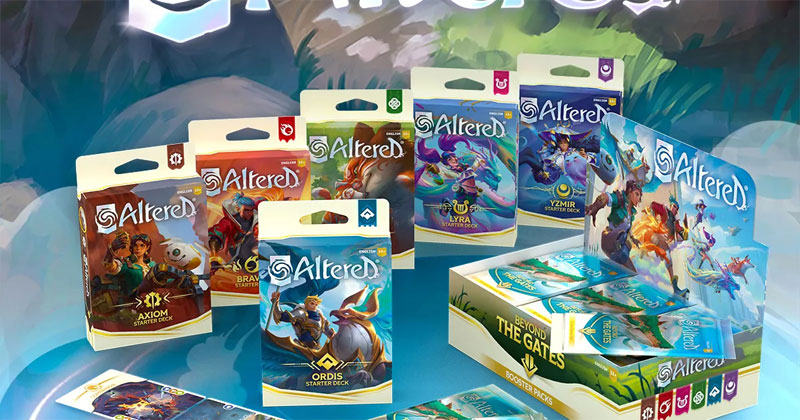
Before Cyberpunk, Equinox’s Altered held the Kickstarter TCG record. Its campaign raised €6,213,305 from 14,997 backers, roughly €414 per supporter. Kickstarter identified it as the platform’s highest-funded TCG of 2024.
Altered offered a differentiated product rather than a famous external license. Its gameplay replaced conventional combat with a race in which expeditions explore a colorful fantasy world. More significantly, every card included a QR code connecting the physical object to a digital account. Players could register ownership, manage collections, trade digital rights, and print playable copies. Its “Unique” cards used procedural variation to make individual cards genuinely distinct.
These innovations gave the campaign a powerful story: Altered was not simply another fantasy TCG, but an attempt to redesign collecting and ownership for a hybrid physical-digital market. The concept generated press coverage, curiosity, and a compelling reason to back the game early.
Yet Altered also provides the clearest warning in this study. In March 2026, Equinox announced that it had failed to secure the €2 million needed to continue the game. Development wound down despite the extraordinary Kickstarter result. The company subsequently released its remaining sets digitally as part of the project’s closure (resource: Altered’s official legacy announcement).
Why the campaign worked
- The game communicated several visible innovations at once.
- Digitally registered ownership created a modern collecting narrative.
- Procedurally generated Unique cards supported scarcity and high-value pledges.
- A polished product and Equinox’s industry credibility reduced perceived risk.
Why campaign success did not endure
Altered demonstrates that crowdfunding concentrates demand into a short period. A campaign can attract collectors, early adopters, and curiosity-driven buyers without proving that local stores will run weekly events or that players will purchase several expansions every year.
The same innovation that creates attention can also create operational burden. A physical-digital TCG requires software infrastructure, account services, marketplace systems, customer support, and long-term data stewardship in addition to ordinary card-game production. Kickstarter revenue may finance the launch, but it does not guarantee recurring cash flow.
Altered is therefore not merely a failed follow-up to a successful campaign. It is evidence that product-market fit at launch and ecosystem-market fit over time are different tests.
3. Sorcery: Contested Realm
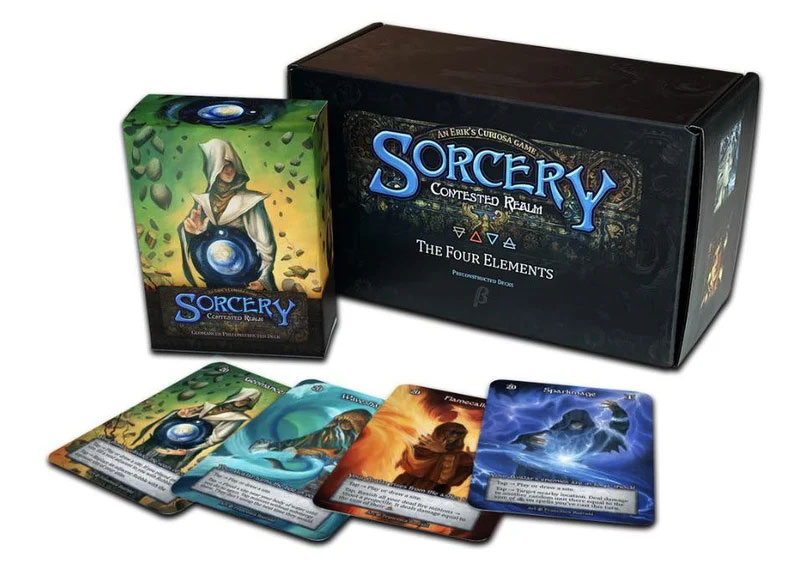
Sorcery: Contested Realm raised NZ$5,784,804 from 6,456 backers, exceeding US$4 million at the time. Its average pledge—approximately NZ$896—was exceptionally high.
Sorcery’s positioning was almost the inverse of Altered’s technological proposition. The game evokes classic fantasy card gaming through hand-painted artwork, tactile presentation, and a battlefield divided into sites. Its creators emphasized traditional media such as oils, acrylics, watercolor, pencil, and ink rather than a high-volume digital-art pipeline.
That artistic commitment created a defensible premium identity. The cards could be valued as game pieces, collectibles, and small works of fantasy art. This helps explain the high pledge per backer: the campaign appealed intensely to a relatively concentrated audience willing to purchase cases, premium accessories, and scarce Alpha products.
The company also avoided promising an aggressive release cycle. Its post-campaign plan anticipated roughly one major set per year, allowing time to commission traditional artwork and refine the game. According to Sorcery’s post-campaign plan, it moved subsequent products into retail and distribution rather than repeatedly treating Kickstarter as its primary sales channel.
Unlike Altered, Sorcery remained active as of 2026, with retail availability, a store network, local events, regional championships, and a global capstone tournament.
Why it worked
- A distinctive art direction made the product immediately recognizable.
- Scarce Alpha inventory and premium accessories supported high-value pledges.
- The campaign targeted a specific psychographic audience rather than the entire TCG market.
- A slower content cadence matched the production method and brand promise.
- Retail and organized play created a path beyond the original backers.
Sorcery suggests that an independent TCG does not need mass-market scale if its creative identity is strong enough. A smaller but committed audience can support a premium product—provided the company manages production cadence and community expectations accordingly.
4. Elestrals
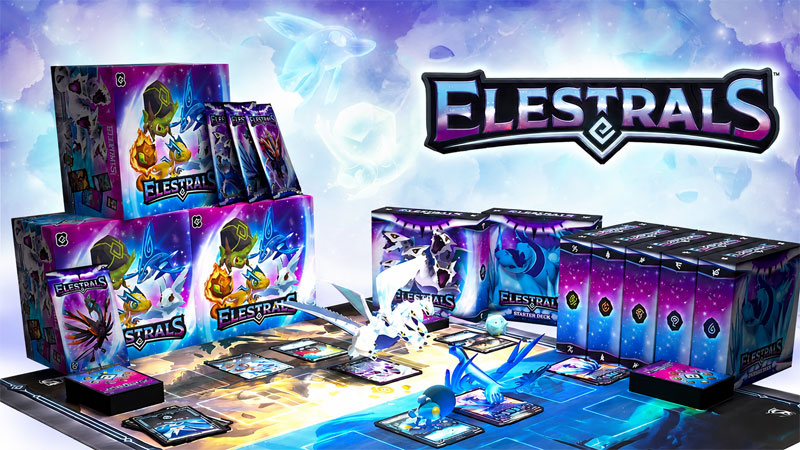
Elestrals raised $1,470,355 from 7,530 backers, averaging approximately $195 per supporter. The game was created by Daniel “aDrive” Clap, a Pokémon-focused YouTube creator with an existing audience of monster-collecting and competitive-game fans.
Compared with Cyberpunk, Elestrals did not begin with a globally licensed fictional universe. Compared with Altered, its pitch did not depend on a radical ownership system. Its principal asset was audience trust.
Creator-led launches possess an important Kickstarter advantage: marketing and community development happen before the campaign is announced. Viewers are already familiar with the creator’s taste, expertise, and personality. Product development can be documented publicly, allowing potential buyers to understand the game and feel involved in its creation.
Elestrals subsequently expanded beyond the physical TCG into Elestrals Clash, a digital adaptation, and Elestrals Awakened, a video game whose own Kickstarter raised more than $1.1 million in 2025. This indicates that the original campaign helped validate not only a card product, but also an extensible entertainment property.
Why it worked
- The founder already had access to a highly relevant audience.
- His Pokémon expertise provided category credibility.
- Community members could follow the product before being asked to buy it.
- The approachable pledge level produced broad participation.
- The fictional universe could extend into digital games and other media.
The broader lesson is that a creator’s audience can substitute for licensed IP—but only when the audience and product category are closely aligned.